Services / Method
Vacuum excavation removes soil with a powerful airflow instead of a bucket or a shovel. Buried cables, pipes and fibre come out intact. Suction excavation, vac-ex and non-destructive digging are names for the same service.
900 mbar
Maximum vacuum, Q20
11,000 m³/h
Air volume, Q20
10 inch
Suction hose
Up to 150 m³
Excavated per day
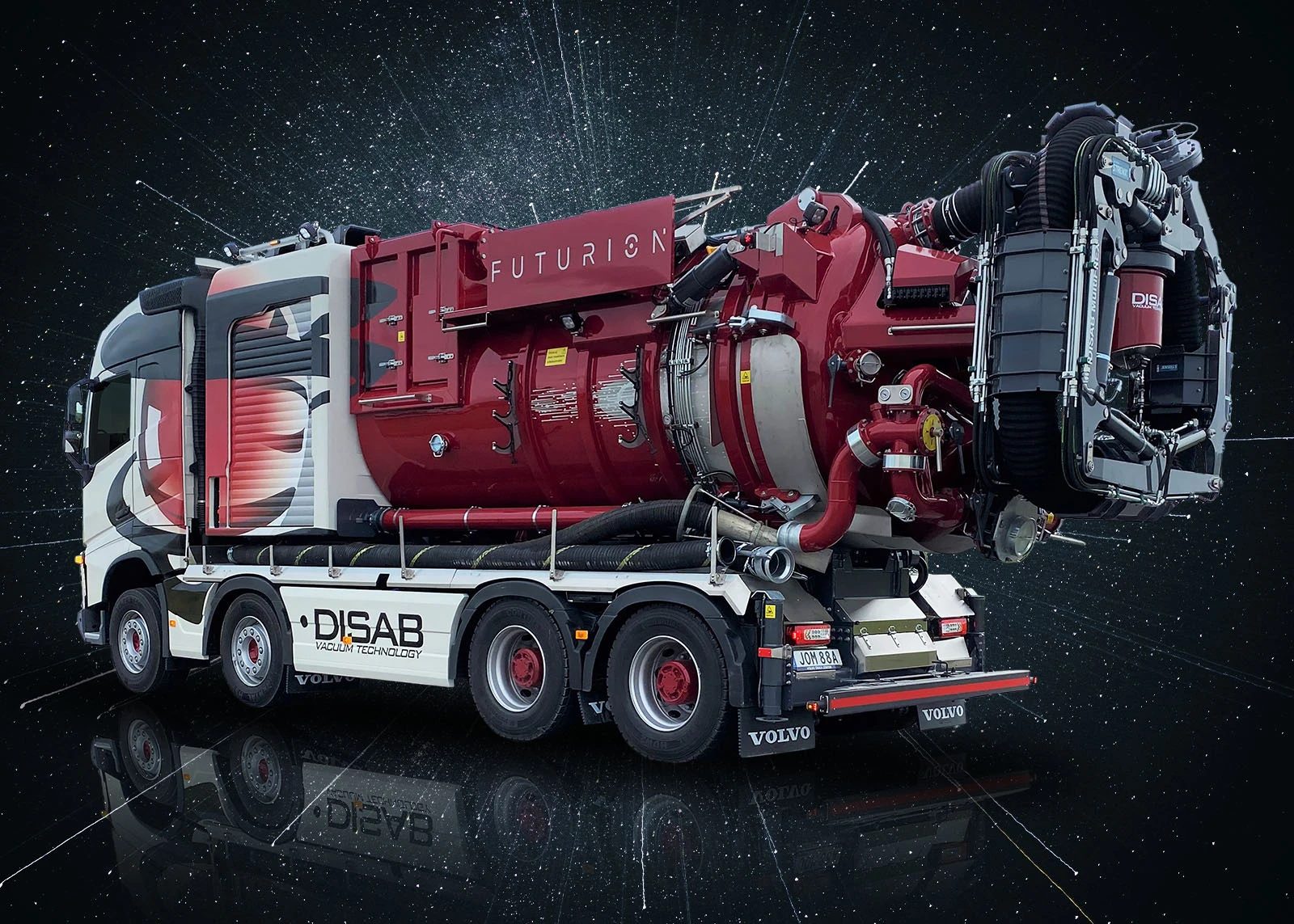
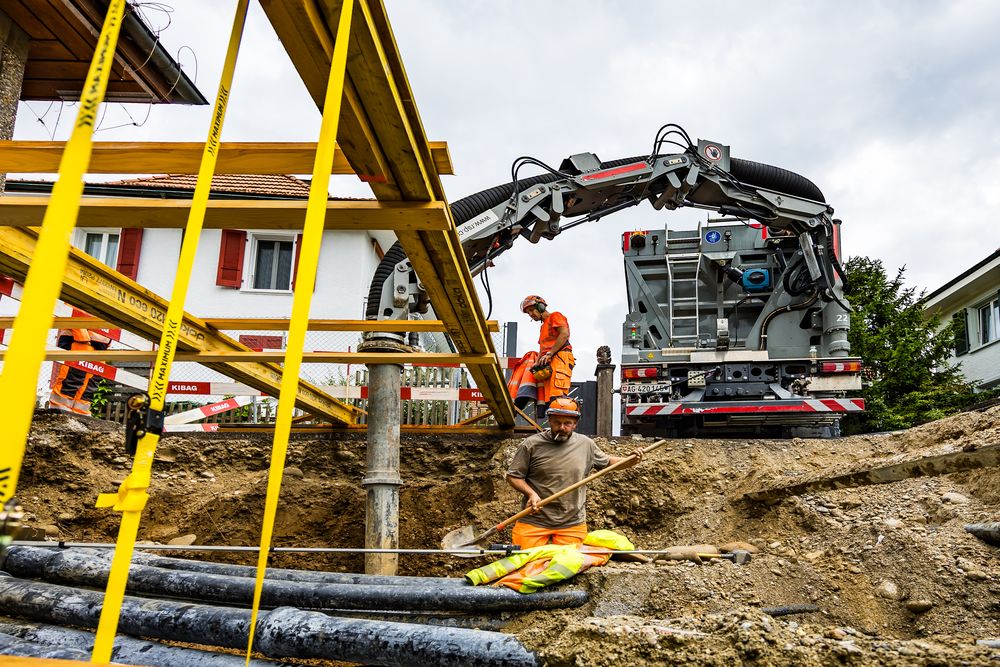
A truck-mounted vacuum unit pulls air through a wide hose at high speed. The airflow lifts sand, soil and stone out of the ground and carries it into a tank on the truck. Nothing rigid goes into the excavation, so whatever is buried there is exposed without being struck.
It is the established method for digging around live utilities internationally. We run it in the UAE with DISAB machines and experienced suction excavation operators.
The names overlap. This is what each one means.
| Name | What it means |
|---|---|
| Suction excavation | Digging with air. The spoil stays dry and goes back in as backfill. This is what we do. |
| Vacuum excavation, vac-ex | The general name for digging with a vacuum unit, by air or by water. |
| Hydro excavation | Pressurised water cuts the soil and a vacuum removes the slurry. |
| Non-destructive digging | Any method that exposes buried services without striking them. |
| Potholing, daylighting | A small excavation made to see one buried service and confirm where it is. |
Air leaves the spoil dry. It goes straight back into the hole as backfill, with no slurry to tanker away and no water to bring to site. Around live electrical cables, air is the method that keeps water out of the excavation.
Swipe the table sideways to see every column.
| Vacuum excavation | Excavator and hand digging | |
|---|---|---|
| Live-utility safety | No mechanical contact with the asset | A shovel or bucket can still strike the utility |
| Speed | Up to 150 m³ per day | Slow and hand-paced near services |
| Site footprint | One truck, spoil in its tank | Crew, spoil heaps and barriers across the site |
| Reinstatement | Narrow, neat excavation | Wider excavation to make good |
| Sector | Typical work |
|---|---|
| Oil and gas | Refineries, gas plants and ATEX-zone digs |
| Power and utilities | Substations, cable corridors and transmission tie-ins, worked while live |
| Telecom | Fibre backbone exposure and micro-trenching |
| Roads and infrastructure | Live-junction utility surveys and traffic-bay digs with minimal closure |
| Rail | Ballast and signal-corridor work inside short possession windows |
| Airports and ports | Apron cable trenching and fuelling-line exposure in operational areas |
| Industrial estates | Plant maintenance, facility upgrades and service tie-ins |
| Step | What happens |
|---|---|
| 1. Locate | Site walk with the asset owner. Utility drawings and records reviewed. Approvals in hand before the truck arrives. |
| 2. Vacuum | Air lifts the sand, soil and stone. Live cables, gas lines and fibre are physically untouched. |
| 3. Contain | Spoil goes into the onboard tank. No skip on site and no dust plume. |
| 4. Hand back | Backfill, compact, photograph and sign off. |
Questions and answers
No. Soil is drawn away by air and nothing rigid touches the asset. Cables, gas, fibre and pipework are exposed intact.
Wet, dry, cohesive or fine-grained material, anything that fits through a 10-inch hose. That covers sand, soil, gravel and stone.
Up to 150 m³ per day.
We excavate with air. For drains, sewers and culverts, where water jetting is the right tool, we run ROLBA jet-vac trucks.
Get a quote
A location, a photo and what is buried there is enough to start. Quotes are returned within the working day.